


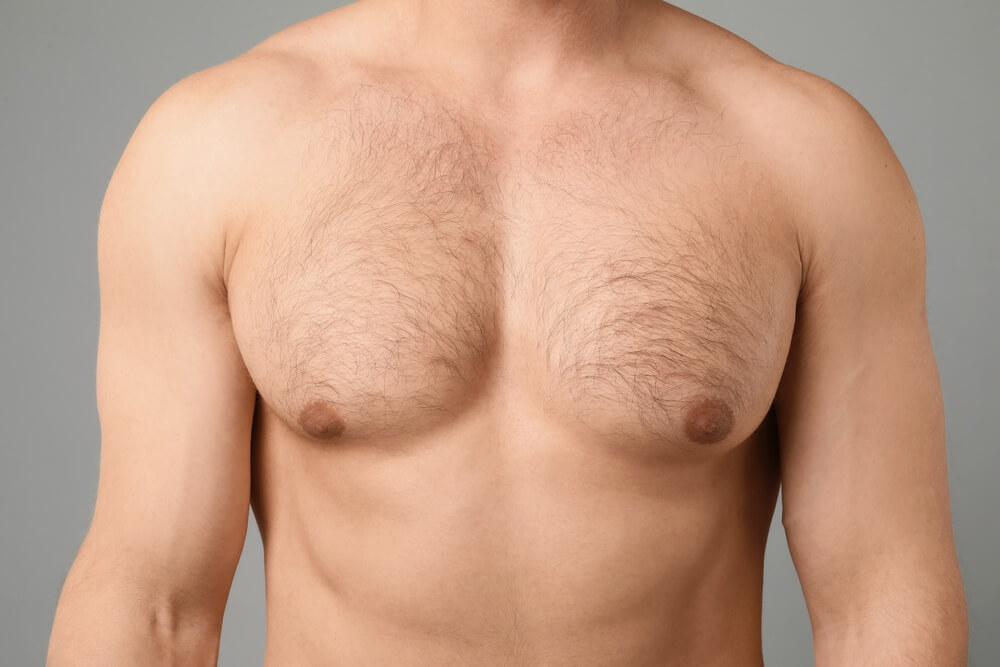
Losing a significant amount of weight changes more than the number on the scale. For some men, it also exposes a frustrating leftover: a chest that still looks full, puffy, or soft even after the diet and the workouts have done their job.
Many men assume the problem is fat they have not lost yet. Often it is not. After major weight loss, chest fullness can come from firm glandular tissue, residual fat, loose skin, or a mix of all three, and each one calls for a different solution. This guide focuses on gynecomastia after weight loss: what is different about the chest, how to tell what is driving it, and how Dr. Keshav Magge approaches treatment for men in Bethesda, Chevy Chase, Potomac, Rockville, Washington, DC, Northern Virginia, and across the DMV. For a broader overview of the condition itself, start with our main guide, Gynecomastia: Understanding the Condition and Your Surgical Options.
Medical disclaimer: This article is for educational purposes only and is not a substitute for an in-person evaluation by a qualified plastic surgeon.
Why Does the Chest Look Worse After Weight Loss?
When the rest of the body slims down, the chest can become more noticeable for several reasons:
- The fat shrinks, but the gland stays. If you had both fat and glandular tissue before weight loss, the fat may melt away while the firm gland remains, which makes the breast tissue easier to see.
- The skin loosens. Skin does not always contract fully after major weight loss, and that can leave a soft, deflated, or drooping chest contour.
- The contrast increases. Once the stomach, waist, and back slim down, a puffy nipple or enlarged areola stands out more.
- Asymmetry shows up. A chest that was slightly uneven can look clearly uneven once fat loss sculpts the rest of the torso.
- Your chest may simply be gland-heavy. In some men, chest shape is driven more by glandular tissue than by fat, so weight loss improves overall body composition without fully flattening the chest.
Is It Gynecomastia, Leftover Fat, or Loose Skin?
This distinction matters because the treatment is different for each. Most men who have lost a lot of weight have some combination, so a physical exam is the only reliable way to sort it out. These general patterns can help you understand what a surgeon is looking for:
- Fat is more likely if the chest feels soft, the fullness has changed as your weight has changed, and the contour looks broad and diffuse rather than centered on the nipple.
- Gland is more likely if you can feel a firm, rubbery mound directly under the nipple, the nipples look puffy even when you are lean, and the fullness has not budged despite significant weight loss.
- Loose skin is more likely if the chest looks deflated, the skin creases or hangs, or the nipple and areola look stretched or sit lower than before.
Can Weight Loss Alone Fix It?
Sometimes. If the fullness is mostly fat, further weight loss and training can reduce it meaningfully. Glandular tissue, however, is not burned off by dieting, so true gynecomastia that remains after weight loss usually needs surgical removal. The good news is that reaching a stable, healthy weight often makes surgery more effective, because the surgeon can see exactly what is left to correct.
Chest Fullness After GLP-1 Weight Loss
Rapid weight loss on GLP-1 medications such as semaglutide or tirzepatide can leave behind loose skin, stretched areolae, persistent gland, or a deflated chest contour, especially when fat disappears faster than the skin can tighten. Some men worry the medication caused their gynecomastia. In many cases it more likely revealed gland or skin laxity that was already there, although a careful exam is the only way to know. If you are weighing chest contouring alongside other body changes from GLP-1 weight loss, our article on GLP-1 and body contouring surgery explains what patients should know.
Who Is a Good Candidate for Gynecomastia Surgery After Weight Loss?
You may be a good candidate if:
- You have lost a meaningful amount of weight and your weight has been stable.
- Your chest still looks full or puffy, or you can feel firm tissue under the nipple.
- You have loose or stretched chest skin that bothers you in clothing or without a shirt.
- You are in good overall health and have realistic expectations.
Timing matters. It is generally best to be at or near your goal weight, because continued weight loss can change the shape of the chest and make planning less predictable. If you are still actively losing weight, waiting may be the better choice, unless the chest is causing significant distress and your surgeon feels earlier treatment is appropriate. Not everyone is an ideal candidate, and our article on who is not a good candidate for male breast reduction explains why.
What Happens at a Gynecomastia Consultation?
At your visit, Dr. Magge determines whether the fullness is mainly gland, fat, loose skin, or a combination. He may evaluate:
- Chest shape, symmetry, and nipple puffiness
- Skin quality and areola size
- Your weight history, including how recently the weight came off
- Whether the concern is limited to the chest or part of broader body contour issues
- Medications, smoking status, and medical history
This is also the time to talk about scar placement, recovery, and which approach fits your goals. You can learn more about Dr. Keshav Magge and his approach to male chest contouring on his bio page.
Treatment Options After Weight Loss
Treatment is customized to the tissue that remains. The most common building blocks are:
- Liposuction, which removes excess fat and helps blend the chest contour.
- Gland excision, which removes the firm glandular tissue that liposuction cannot fully eliminate.
- Skin excision, which may be needed when major weight loss has left loose, hanging chest skin.
- Combination surgery, which is common after significant weight loss and often gives the best contour.
Liposuction alone often falls short for true gynecomastia because glandular tissue is denser and more fibrous than fat. A firm disc beneath the nipple may leave residual puffiness if it is not removed directly. Our male breast reduction (gynecomastia) page describes the procedure, and our male liposuction page explains how liposuction fits into chest and body contouring.
Scars depend on the technique. They are often placed along the lower edge of the areola or in discreet chest creases, with small access points for liposuction. When loose skin must be removed, scars can be longer. After major weight loss that trade-off is sometimes greater because the skin has less natural recoil, and a good plan weighs the scar against the improvement in contour.
When More Than the Chest Is Involved
Men with significant weight loss often have more than one area of concern, such as loose abdominal skin, flank fullness, or laxity elsewhere on the body. A staged or combined plan may make sense. You can read about male tummy tuck and our overview of body contouring after weight loss to see how these procedures fit together.
Recovery After Post-Weight-Loss Chest Contouring
Recovery depends on what was done. Liposuction alone is typically a lighter recovery than gland and skin excision, and drains are used in some cases, particularly when more tissue is removed or skin is excised. Most men start with swelling, soreness, tightness, and a compression garment, then ease back into activity in stages. Lower-body exercise usually resumes sooner, while chest and upper-body training is delayed until healing is secure. For a stage-by-stage timeline, see the recovery section of our main gynecomastia guide, and always follow the specific instructions you receive from Dr. Magge.
Results, Recurrence, and Risks
Results are generally long lasting when your weight stays stable. Recurrence is more likely with significant weight gain, ongoing anabolic steroid use, certain medications, or unaddressed hormonal factors. If the cause of your chest fullness is unclear, or it is new or changing quickly, your surgeon may recommend a medical evaluation or hormone testing before surgery.
As with any surgery, risks can include bleeding, infection, contour irregularity, asymmetry, fluid collection, changes in sensation, scarring, and the need for revision. Post-weight-loss patients may have more skin laxity, which makes careful planning and an experienced surgeon especially important.
Frequently Asked Questions
Is Gynecomastia After Weight Loss the Same as Pseudogynecomastia?
Not always. Pseudogynecomastia means the fullness is mostly fat. After weight loss, many men have a mix of gland, fat, and loose skin, and an exam is needed to tell them apart.
If I Lose More Weight, Will My Chest Finally Flatten?
Possibly, if the remaining problem is mostly fat. If firm gland is present, further weight loss usually will not remove it.
Can GLP-1 Medications Cause Gynecomastia?
Rapid weight loss on these medications can reveal existing gland or leave loose chest skin that looks more prominent. If you are concerned, a surgeon can examine you and talk through the possible causes.
Will Surgery Help If I Have Loose Skin?
Yes, but the technique matters. Loose skin may require more than liposuction, and some patients need skin excision to tighten the chest.
Will I Be Able to Build Chest Muscle Afterward?
Yes. Once excess gland and fat are removed, the pectoral muscles often look more defined, and most men return to full activity after healing. Exercise also helps maintain your result.
Can I Combine Gynecomastia Surgery With Other Procedures?
Often, yes. Some men combine it with liposuction of the abdomen or flanks or with other body contouring, depending on their anatomy and goals.
Take the Next Step
Gynecomastia after weight loss is frustrating, but it is also common and treatable. For many men, the chest is the last area to match the transformation they worked so hard to achieve. The key is getting the diagnosis right, because some men need liposuction, some need gland removal, and others need skin excision or a combination approach.
If you are in the Bethesda, Chevy Chase, Potomac, Rockville, Washington, DC, or Northern Virginia area and want to know what is behind your chest fullness, schedule a consultation with Dr. Magge. For more background on the condition, you can also read our complete guide to gynecomastia and your surgical options.
This article is for general educational purposes only and does not constitute medical advice. Individual results, risks, and recovery timelines vary.

Dr. Keshav Magge, MD, FACS, is a board-certified plastic surgeon serving patients across Bethesda, Washington, D.C., and Northern Virginia. Known for his expertise in deep-plane facelifts, facial rejuvenation, breast augmentation, mommy makeovers, and male breast reduction, Dr. Magge is recognized for delivering elegant, natural-looking results to patients locally, nationwide, and internationally.

Gynecomastia: Understanding the Condition and Your Surgical Options – Dr. Magge
August 18, 2026
For many men, the chest area is a source of real self-consciousness. Whether it involves persistent puffiness around the nipple, a general fullness that…
Read more
Who Is Not a Good Candidate for Male Breast Reduction (Gynecomastia Surgery)? – Dr. Magge
March 18, 2026
Male breast reduction (surgical treatment for gynecomastia) can produce excellent cosmetic and psychological results, but it’s not appropriate for everyone. Choosing surgery at the wrong…
Read more