


For many men, the chest area is a source of real self-consciousness. Whether it involves persistent puffiness around the nipple, a general fullness that does not respond to weight loss, or discomfort during physical activity, gynecomastia affects millions of men across the United States. Despite how common it is, there is often significant misinformation about what causes it, how to treat it, and what can actually be done to fix it.
At our practice, serving patients throughout Bethesda, Chevy Chase, Potomac, Rockville, Washington, D.C., Northern Virginia, and the broader DMV area, Dr. Keshav Magge frequently sees men who have spent years struggling with this condition. Many have spent countless hours in the gym or restricted their diets, only to find that their chest contour remains unchanged.
This guide provides comprehensive, medically accurate information about gynecomastia surgery: the physiological causes, the distinction between fat and glandular tissue, the modern phenomenon of “post-weight-loss” gynecomastia, and what the surgical journey actually involves.
What Is Gynecomastia?
Gynecomastia is the enlargement of male breast tissue. It is not simply the accumulation of body fat; it results from a hormonal imbalance, specifically an excess of estrogen relative to testosterone.
Every man has some breast tissue. In some men, this tissue stays quiescent and minimal. In patients with gynecomastia, the ductal tissue of the breast becomes enlarged and fibrous. It can occur in one or both breasts, and in many cases it is asymmetrical. The condition is often triggered by:
- Puberty: hormonal fluctuations during adolescence are a common cause, though many cases resolve on their own as hormones stabilize.
- Aging: as men age, testosterone levels naturally decline while estrogen levels may remain stable or increase, potentially causing tissue growth.
- Medications and substances: certain prescription drugs, herbal supplements, anabolic steroids, and even marijuana use can stimulate breast tissue growth.
- Underlying health conditions: while less common, certain liver, kidney, or thyroid disorders can disrupt hormone metabolism.
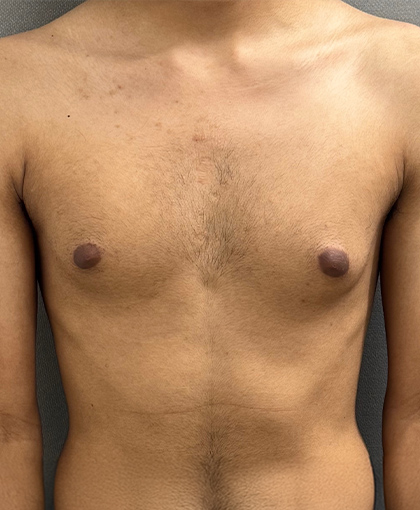

True Gynecomastia vs. Pseudogynecomastia
The most critical step in your consultation is determining what you are actually dealing with.
- True gynecomastia: an actual enlargement of the glandular breast tissue. It feels firm, rubbery, or like a dense disk beneath the areola. Because this is fibrous tissue, it is biologically resistant to diet and exercise; no amount of bench pressing or calorie counting will cause it to shrink or disappear.
- Pseudogynecomastia (lipomastia): the accumulation of fatty tissue in the chest area due to general weight gain. It feels soft to the touch and moves with the skin. Pseudogynecomastia can often be reduced or eliminated through significant weight loss and targeted fitness efforts.
Many men have a mixed presentation, where both excess fat (pseudogynecomastia) and firm glandular tissue (true gynecomastia) are present. In these cases, a combined surgical approach is often the most effective strategy.
Can Diet and Exercise Eliminate Gynecomastia?
This is perhaps the most common question patients ask. The short answer: it depends on the cause.
- If it is pseudogynecomastia (fat): yes, a structured weight loss program and resistance training can dramatically improve the chest contour. As you burn body fat, the soft fat deposits in the chest decrease, and developing the pectoral muscles underneath can add a more defined, masculine appearance.
- If it is true gynecomastia (glandular tissue): no. Glandular tissue is fundamentally different from adipose tissue and does not “burn off.” Even an elite athlete with very low body fat can have gynecomastia if glandular development is present. In fact, when very lean men have gynecomastia, the condition often appears more prominent, since there is no surrounding fat to soften the contour of the enlarged gland.
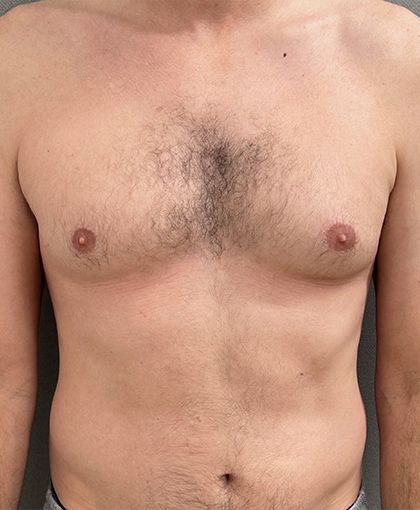
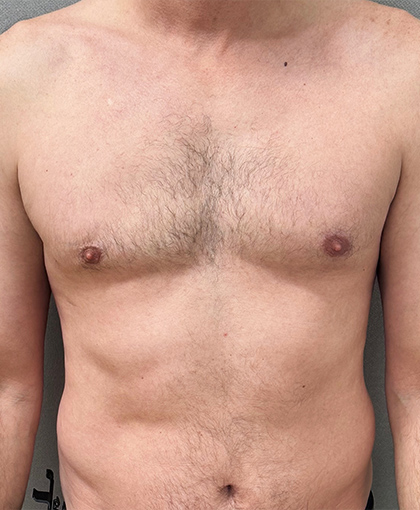
The Modern Phenomenon: Weight Loss and GLP-1 Medications
In recent years, the widespread use of GLP-1 agonists (such as Ozempic, Wegovy, or Mounjaro), which our practice also offers through a supervised semaglutide weight loss program, and the success of bariatric surgery have led to a significant increase in patients seeking gynecomastia correction.
When a patient loses a significant amount of weight, perhaps 50, 80, or 100+ pounds, the fat layer that was masking their chest is removed. Patients often expect a lean, athletic chest, only to discover a prominent, firm lump of glandular tissue that had previously been hidden. This is not a failure of the weight loss program; it is simply the “unmasking” of tissue that was there all along. If you are in the Bethesda or D.C. area and have recently achieved significant weight loss, you may finally be seeing anatomy that has been present for years. Surgery is often the final step in the transformation for these patients.
Does Testosterone Cause Gynecomastia?
This is a frequent point of confusion. Many patients ask whether their testosterone replacement therapy (TRT) caused their condition.
- Exogenous testosterone: if a patient is taking testosterone supplements (bodybuilding or TRT), the body may convert excess testosterone into estrogen via an enzyme called aromatase. This spike in estrogen can directly stimulate breast tissue growth.
- Testosterone deficiency: conversely, low natural testosterone levels can create a hormonal imbalance where estrogen dominates, also leading to gynecomastia.
In either scenario, the result is the same: stimulation of the breast gland. Dr. Magge will always conduct a thorough medical history review to understand your hormonal background before proceeding with surgery.
The Surgical Procedure: Liposuction vs. Gland Excision
Modern gynecomastia surgery is rarely a “one size fits all” procedure. Most successful results involve a hybrid approach to provide the most natural, flat contour.
Liposuction (lipoplasty)
If there is a fatty component, liposuction is the gold standard. Using a small cannula (a thin, hollow tube), Dr. Magge carefully removes the excess fat deposits across the chest and toward the armpit (axilla) to create a smooth transition to the rest of the torso.
Gland excision
For the firm, rubbery disk of glandular tissue, liposuction alone is not enough; this tissue must be surgically removed. Dr. Magge typically makes an incision along the bottom border of the areola, a location chosen specifically to keep the scar hidden within the natural color transition of the nipple. Through this incision, the glandular tissue is dissected and removed, ensuring the firm “lump” behind the nipple is gone.
In many cases, the surgery involves both: liposuction to contour the chest area and excision to remove the hard gland so it cannot return.
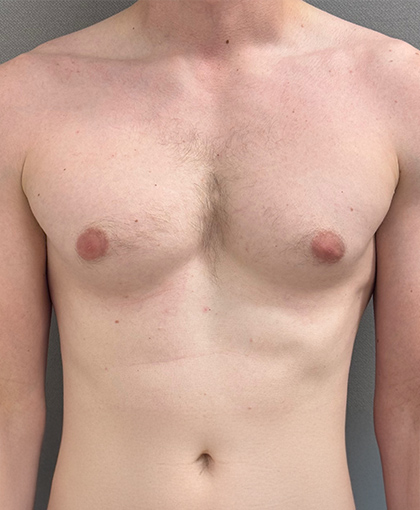
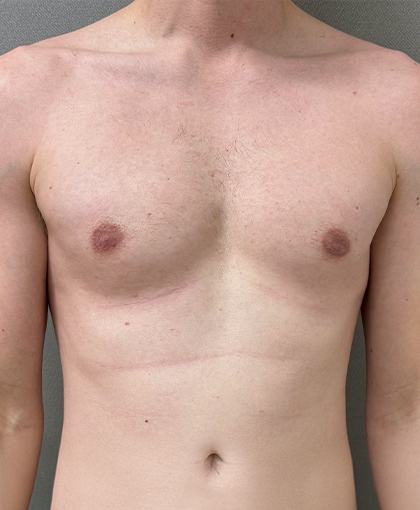
Will There Be Scars?
Yes, but they are designed to be as inconspicuous as possible. In most cases, the incision is semicircular, hugging the bottom of the areola, and these marks typically fade to become nearly imperceptible over time. For patients with very large, pendulous amounts of tissue (often seen after massive weight loss), a different incision pattern may be required, which Dr. Magge will discuss during your consultation.
Browse our before-and-after gallery to see real results from gynecomastia surgery at Cosmetic Surgery Associates.
Recovery Timeline: What to Expect
Recovery is generally manageable, but it requires patience. Here is a typical timeline for our patients in the DMV area:
- Days 1 to 3: you will wear a compression garment immediately after surgery to minimize swelling and support the healing tissue. Soreness is common, similar to muscle soreness after an intense chest workout.
- Week 1: most patients return to light, desk-based work within 5 to 7 days. Avoid heavy lifting, pushing, or pulling.
- Weeks 2 to 4: swelling continues to subside. You may be cleared to resume light cardiovascular exercise, such as walking.
- 6 weeks: this is the milestone for full activity. Most patients are cleared for heavy lifting, bench pressing, and intense gym routines.
Note: following postoperative instructions, including the strict use of compression garments, is essential to achieving a smooth, contoured result.
Educational Spotlight: The Procedure
To help you visualize how these procedures are performed, we recommend reviewing the educational video below. It offers a transparent look at the surgical process, which may help ease anxiety about the procedure. Always consult with a board-certified plastic surgeon to discuss your specific anatomy.
Frequently Asked Questions
Can gynecomastia return after surgery?
If the glandular tissue is completely and properly excised, the chance of the condition returning is extremely low. However, significant future weight gain or the use of certain medications, such as anabolic steroids or illicit substances, can affect the chest area. Maintaining a stable, healthy lifestyle is key to preserving your results.
Is gynecomastia surgery covered by insurance?
In most cases, gynecomastia surgery is considered a cosmetic procedure and is not covered by insurance. If there is a documented medical issue, such as severe pain, physical impairment, or a specific endocrine disorder, some insurance plans may provide coverage. Our office team can help you look into this, though we recommend planning for the procedure as self-pay; you can review financing options as well.
Will I lose sensation in my nipples?
Temporary numbness is common after surgery as the nerves heal. In the vast majority of cases, full sensation returns after several weeks or months. Permanent loss of sensation is rare when the procedure is performed with precision.
How do I know if I need a surgeon or a personal trainer?
If you can pinch a large amount of soft tissue that moves freely with the skin, it is likely fat, and training may help. If you feel a firm, rubbery disk that does not seem to get smaller no matter how much weight you lose, it is likely glandular tissue, and surgery is required. A physical examination by Dr. Magge is the only way to get a definitive diagnosis.
What is the “DMV” advantage for my recovery?
Choosing a surgeon in your local area, whether you are in Potomac, Rockville, or Northern Virginia, ensures you have easy access to follow-up care. You will not have to navigate long-distance travel during your initial recovery, allowing you to relax and heal in the comfort of your own home.
Choosing the Right Surgeon in the DMV
Gynecomastia surgery is a precise procedure that requires both artistic judgment and technical expertise. You want a surgeon who understands the male aesthetic: a chest that is flat and masculine, not hollowed out or “operated on.”
Dr. Keshav Magge is dedicated to helping patients throughout Bethesda, Chevy Chase, Potomac, Rockville, Washington, D.C., and Northern Virginia regain their confidence. Our practice prioritizes discretion, education, and personalized surgical planning, performed at our own Quad-A certified in-house operating center in Bethesda, MD.
Why Choose Dr. Magge?
- Customized planning: we do not apply a generic surgical template to every patient. We assess your unique ratio of fat to gland and adjust the technique accordingly.
- Local expertise: we are deeply rooted in the DMV community, providing convenient, high-quality care with a focus on patient safety and privacy.
- Focus on natural results: our goal is a result that looks natural and fits your frame, not an artificial, over-corrected appearance.
Take the Next Step
You do not have to live with the self-consciousness of gynecomastia. Whether you are ready to address a lifelong concern or you have recently achieved weight loss and want to finalize your transformation, we are here to help. Contact our office today to schedule your private consultation with Dr. Keshav Magge. During your visit, we will review your goals, examine your tissue, and create a surgical roadmap tailored to your body.
References and further reading: American Society of Plastic Surgeons (plasticsurgery.org), National Center for Biotechnology Information (ncbi.nlm.nih.gov), and The Aesthetic Society (aestheticsociety.org).
Disclaimer: this blog post is for informational purposes only and does not constitute medical advice. For a personalized diagnosis and surgical plan, please schedule a consultation with a qualified board-certified plastic surgeon.

Dr. Keshav Magge, MD, FACS, is a board-certified plastic surgeon serving patients across Bethesda, Washington, D.C., and Northern Virginia. Known for his expertise in deep-plane facelifts, facial rejuvenation, breast augmentation, mommy makeovers, and male breast reduction, Dr. Magge is recognized for delivering elegant, natural-looking results to patients locally, nationwide, and internationally.

Who Is Not a Good Candidate for Male Breast Reduction (Gynecomastia Surgery)? – Dr. Magge
March 18, 2026
Male breast reduction (surgical treatment for gynecomastia) can produce excellent cosmetic and psychological results, but it’s not appropriate for everyone. Choosing surgery at the wrong…
Read more