


Looking in the mirror and wondering whether it is time for Botox or fillers is common. Here is a clear way to decide, based on what is actually changing in your face rather than your age or what is trending.
The Short Answer: When Are You Ready for Botox or Fillers?
You may be ready for Botox or dermal fillers when a specific change bothers you, you understand what each treatment can and cannot do, and a qualified provider has evaluated your facial anatomy. Botox softens lines caused by muscle movement. Fillers restore volume or enhance contours. There is no required age, and choosing to wait is a perfectly reasonable decision.
Have you noticed that your face looks a little more tired than it used to? Perhaps the lines between your eyebrows stay visible even when you are relaxed, your makeup settles into forehead creases, or your cheeks seem less full. These changes are a normal part of aging, but they raise a fair question about what to do, if anything.
At Cosmetic Surgery Associates in Bethesda, Maryland, we believe the answer should never be based on age alone, social media trends, or pressure to look younger. It should start with your anatomy, the changes you are noticing, and what you hope to accomplish. Choosing the right treatment, or deciding that no treatment is necessary, is part of achieving natural-looking results.
What Are the Signs You May Be Ready for Botox?
The most common sign is expression lines that stay visible when your face is relaxed. When you smile, squint, frown, or raise your eyebrows, the muscles beneath your skin contract repeatedly, and over time those movements can leave lines behind. Botox at Cosmetic Surgery Associates is a neuromodulator that temporarily reduces the activity of selected facial muscles, which softens expression-related wrinkles. Four signs worth noticing:
Forehead Lines That Stay Visible at Rest
Forehead lines first appear when you raise your eyebrows. As they become more established, they may remain even without movement. Botox can help soften them, although deeper creases may not disappear completely.
Pronounced Lines Between the Eyebrows
Often called the “11 lines,” these vertical creases can make you look tense or concerned even when you feel relaxed. Botox may reduce their appearance by relaxing the muscles responsible.
Crow’s Feet That Are Becoming More Noticeable
Fine lines at the outer corners of the eyes are usually most visible when you smile. If they bother you, Botox may soften them while preserving natural expression.
Makeup Settling Into Expression Lines
If foundation or concealer collects in forehead or frown lines, those creases may be becoming more established. Botox may reduce the muscle movement contributing to them, but it does not directly treat dry skin or uneven texture.
If you are mainly thinking about softening lines before they deepen, our guide to preventative Botox covers timing, dosing, and what the evidence does and does not show.
You do not need Botox simply because you have facial expressions or fine lines. Treatment is a personal choice, not a requirement of aging.
What Are the Signs You May Be Ready for Dermal Fillers?
Dermal fillers are a better fit when the concern is lost volume or contour rather than muscle movement. Hyaluronic acid (HA) fillers are injectable gels that can add volume, enhance selected contours, and improve certain folds or depressions. Over time, changes in facial fat, bone structure, skin elasticity, and soft tissue support affect how light falls across the face. You can explore the options on our dermal fillers page. Five signs worth discussing:
Cheeks That Look Flatter or Less Defined
Age-related changes in volume and support can flatten the midface. Carefully selected fillers may help restore or enhance cheek contours in appropriate candidates. Our guide on who is a good candidate for cheek filler explains what we look for.
Lips That Have Lost Fullness or Definition
Lips naturally change with age, and some people notice less definition along the border or reduced fullness. Conservative lip filler can enhance shape and volume without an exaggerated result.
Deeper Folds Around the Mouth
Nasolabial folds, which run from the nose toward the corners of the mouth, can become more prominent as facial structures change. Fillers may improve certain folds, but treatment has to account for the underlying anatomy rather than simply filling every visible crease.
Facial Contours That Look Less Balanced
Some adults consider filler to enhance chin projection or improve facial proportions. This is not necessarily an age-related concern. It may reflect natural anatomy and personal aesthetic preferences.
Hollowing or Shadows That Make You Look Tired
Volume changes can create shadows in certain areas, but not every hollow should be filled. Under-eye concerns, for example, may come from pigmentation, skin laxity, puffiness, or anatomy that calls for a different approach. See PRP vs. under-eye fillers for how those options differ.
Fillers are also not automatically the answer for sagging skin. When laxity is significant, adding volume may not produce the result you want, and a facelift or another approach may be worth discussing. Our overview of surgical and non-surgical facial rejuvenation options can help you compare.
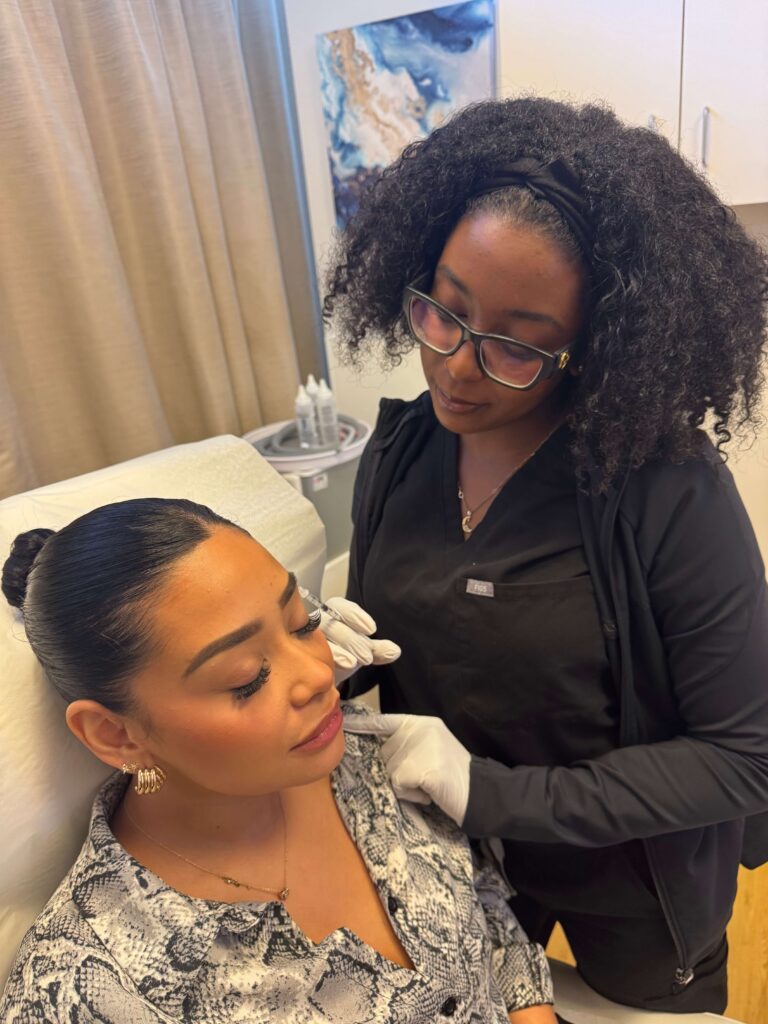
Do You Need Botox, Fillers, or Something Else?
Botox and fillers address different concerns, and some patients benefit from one, both, or neither. A patient bothered by forehead lines and reduced cheek volume, for example, has two separate issues that call for two different approaches. As a general guide:
- Forehead expression lines: Botox may be considered.
- Frown lines between the eyebrows: Botox may be considered.
- Crow’s feet: Botox may be considered.
- Loss of cheek volume: dermal fillers may be considered.
- Lip volume or definition: dermal fillers may be considered.
- Certain folds around the mouth: dermal fillers may help, depending on the cause.
- Chin contour enhancement: dermal fillers may be considered.
- Significant facial sagging: an evaluation for alternative treatments is the better first step.
- Fine lines caused mainly by sun damage or rough texture: skincare or resurfacing, such as microneedling or laser skin resurfacing, may be more appropriate.
For a side-by-side look at how the two injectables work, read our Botox vs. dermal fillers comparison.
Could Better Skincare Be the Answer?
Not every visible sign of aging needs an injectable. Fine lines associated with dryness may improve with moisturization. Uneven pigmentation and sun damage may respond to topical products or laser treatments. Rough texture may benefit from resurfacing. Facial volume loss is usually better addressed with fillers, and expression-related wrinkles with Botox. Medical-grade skincare, including retinoids, antioxidants, and broad-spectrum sunscreen, can complement in-office treatments, and our medical-grade skincare routine guide walks through where to start. Skincare cannot replace lost volume, and fillers cannot replace daily sun protection.
Not sure which treatment fits your concern? Schedule a consultation with Cosmetic Surgery Associates in Bethesda, MD.
Does Your Age Decide When You Should Start?
No. There is no universally recommended age to start Botox or dermal fillers. Someone in their late 20s may have noticeable expression lines, while someone in their 40s may have relatively few. Genetics, sun exposure, smoking, skin characteristics, facial anatomy, and lifestyle all influence how your face changes. Cosmetic Botox is generally intended for adults, and a qualified provider can tell you whether treatment makes sense for your age, anatomy, and concerns.
For many people in their 20s and 30s, daily sunscreen and appropriate skincare matter more than injections. Later in life, more pronounced skin laxity may limit what injectables can accomplish, and another procedure may offer a more predictable result. If you are curious about subtle, lower-dose approaches, see our guides to preventative Botox and Baby Botox. Your facial anatomy and personal goals matter more than your birthday.
“The right time to consider Botox or fillers isn’t determined by your age or the first wrinkle you notice. It’s when a subtle, thoughtful treatment can help you look as refreshed as you feel, without changing what makes your face uniquely yours. The best aesthetic results aren’t the ones people notice; they’re the ones that allow your natural beauty to stand out.” Dr. Keshav Magge, Plastic Surgeon, Cosmetic Surgery Associates | Bethesda, MD
Are You Emotionally Ready for Botox or Fillers?
Being ready involves more than spotting a wrinkle. Before you schedule, consider four questions:
- Am I doing this for myself? Aesthetic treatments should reflect your preferences, not pressure from friends, partners, or social media.
- Do I understand what the treatment can realistically accomplish? Botox may soften certain expression lines, but it does not stop aging. Fillers can enhance volume and contours, but they cannot correct every type of sagging.
- Am I comfortable with maintenance? Botox results generally last about three to four months, although results vary. Hyaluronic acid fillers last longer, from several months to well over a year depending on the product, treatment area, and individual factors.
- Am I willing to discuss the risks? Botox can cause bruising, headache, asymmetry, or unwanted muscle weakness. Fillers can cause swelling, bruising, lumps, and infection. Rare but serious filler complications include vascular occlusion, tissue injury, and vision loss, which the FDA’s guidance on dermal fillers describes in detail.
A qualified provider should discuss these possibilities, explain how complications are handled, and help you make an informed decision. If you are uncertain, it is reasonable to wait.
Will Botox or Fillers Make You Look Unnatural?
Natural-looking results depend on the treatment plan, product selection, injection technique, dosage, your anatomy, and your goals. With Botox, the aim is usually to soften selected lines while preserving appropriate movement. With fillers, it is to enhance proportions or replace selected volume without excessive fullness. More product does not necessarily mean better results, and a conservative plan with reassessment before adding more is often the better route for subtle changes. Our guide to natural-looking Botox explains how to avoid a frozen look, and at Cosmetic Surgery Associates we emphasize individualized planning and realistic expectations rather than treating every line or fold.
What Should You Know Before Your First Appointment?
The consultation is your chance to understand your options before you decide. Your provider should review your medical history, medications, allergies, previous cosmetic procedures, and goals, and evaluate your facial anatomy to confirm the proposed treatment is suitable. Some patients may need to postpone treatment because of pregnancy, breastfeeding, active infection, or other medical considerations, and safety considerations vary by treatment and product.
For fillers, it helps to know that complications may need prompt medical treatment, and that reversing hyaluronic acid filler with hyaluronidase is not guaranteed to resolve every complication. Questions worth asking your injector:
- Is Botox or filler the most appropriate treatment for my concern?
- How much improvement can I realistically expect?
- Which product will be used, and why?
- What are the risks for this treatment area?
- How much downtime should I anticipate?
- How often might I need maintenance?
- What happens if I experience an unexpected complication?
A thoughtful consultation should leave you feeling informed, not pressured.
When Might Botox or Fillers Not Be the Right Choice?
Injectables are useful, but they have limits. Botox may not adequately address wrinkles caused mainly by significant skin damage or laxity. Fillers may not be appropriate when the main concern is substantial excess skin, or when adding volume could make an area look heavier. Certain medical conditions, medications, previous procedures, and anatomical factors can also affect candidacy. For some patients, treatments such as laser resurfacing, microneedling, or surgery are worth discussing. The purpose of a consultation is not to recommend the greatest number of procedures. It is to identify the safest and most appropriate options for your goals.
Frequently Asked Questions About Starting Botox and Fillers
You are likely ready when expression lines bother you, you understand that Botox softens movement-related lines and does not stop aging, and you have discussed the risks and maintenance with a qualified provider. If any of those feels uncertain, a consultation can help you decide.
Yes. Neither treatment is medically required, and many people never need them. Waiting does not close any doors, and a consultation can be informational only.
Not necessarily. Lines that appear during expression are normal. If certain lines bother you, Botox may soften them, but you do not need treatment simply because your skin moves when you smile.
It depends on the cause. Some lines come from muscle movement, while others reflect volume changes, skin texture, or loss of support. The approach varies, and certain areas require particular caution.
In appropriate candidates, yes. Your provider will decide whether combining treatments suits your medical history and treatment plan.
Generally, no. When Botox wears off, muscle activity gradually returns and expression lines may become more visible again, while natural aging continues. Stopping treatment does not inherently make your face age faster.
Hyaluronic acid fillers generally diminish over time, although some material may persist longer than expected. Your appearance will continue to change naturally, and outcomes vary by product, location, and treatment history.
There is no universal number of units. The right dose depends on the treatment area, muscle strength, anatomy, product, and desired outcome.
FDA-approved fillers have established uses, but no filler procedure is risk-free. Safety depends on patient selection, product authenticity, injection technique, anatomical knowledge, and the ability to recognize and manage complications.
It may, when expression lines contribute to a tired or tense look. Dark circles, puffiness, skin laxity, and volume loss usually need different approaches.
There is no single schedule. The right interval depends on the product, area, existing volume, and how the filler has settled. Additional filler should not be added automatically without reassessment.
Cosmetic Surgery Associates is in Bethesda, Maryland, and serves patients from Washington, DC, Chevy Chase, Potomac, Rockville, and surrounding communities. A consultation can help determine whether Botox, dermal fillers, skincare, or another treatment fits your concerns.
Considering Botox or Fillers in Bethesda, Maryland?
Deciding when to begin injectable treatment is personal. You do not need to wait until wrinkles are deeply established, and you do not need to start simply because you have reached a certain age. The best time is when you have a specific concern, realistic expectations, an understanding of the risks, and access to a qualified medical professional who can evaluate your needs.
At Cosmetic Surgery Associates, our aesthetic team offers personalized consultations to help you understand your options and build a plan around your goals. Whether you are exploring Botox for the first time, considering dermal fillers, or wondering whether professional skincare would serve you better, we can help you make an informed decision.
Ready to explore your options? Schedule your injectable consultation with Cosmetic Surgery Associates in Bethesda, MD.

Dr. Keshav Magge, MD, FACS, is a board-certified plastic surgeon serving patients across Bethesda, Washington, D.C., and Northern Virginia. Known for his expertise in deep-plane facelifts, facial rejuvenation, breast augmentation, mommy makeovers, and male breast reduction, Dr. Magge is recognized for delivering elegant, natural-looking results to patients locally, nationwide, and internationally.

Proportionate Breast Augmentation in the DMV: Why Patients Are Choosing Smaller, Natural-Looking Implants – Dr. Magge
October 29, 2026
Over the past few years, more breast augmentation patients have walked into consultations asking for the same thing: a result that looks like their…
Read more
Why a Deep Plane Facelift Costs More: What to Know Before Your Consultation – Dr. Magge
October 5, 2026
If you have started researching deep plane facelifts, you have probably noticed that they often cost more than a mini facelift or a traditional…
Read more